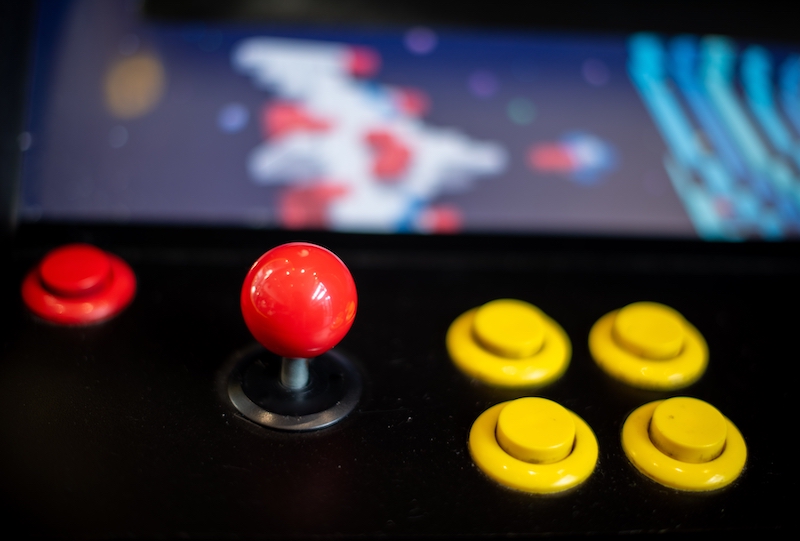
There's something quietly remarkable about how gaming went from a technical curiosity to the world's largest entertainment industry in the space of five decades. The journey involves engineering breakthroughs, corporate rivalry, cultural shifts and an endless stream of creative people who believed that interactive experiences could be just as meaningful as any film or novel.
This is that story — not exhaustive, but honest. A tour through the key moments and machines that shaped the medium we know today.
The Very Beginning: Before Home Consoles
Video games didn't begin in living rooms. They began in research labs. In the early 1950s, programmers at universities and military institutions were already building simple games — tennis simulators, chess programs, tic-tac-toe — mostly as ways to demonstrate the capabilities of the enormous, room-filling computers of the era.
The first game that felt genuinely game-like was likely Tennis for Two, designed by physicist William Higinbotham in 1958. Displayed on an oscilloscope at Brookhaven National Laboratory, it wasn't commercially available, but it showed that interactive entertainment was possible.
A decade later, in 1972, Nolan Bushnell and Ted Dabney founded Atari and released Pong into arcades. Despite its simplicity — two paddles, a bouncing square, a score — Pong became a genuine phenomenon. People waited in queues to play it. The machines broke down because operators hadn't anticipated how frequently the coin trays would fill.
"We never thought people would spend that much time playing. We assumed they'd get bored. We were wrong." — Nolan Bushnell, reflecting on Pong's reception
The Golden Age of Arcades: 1975–1985
The decade that followed Pong's success was the golden age of arcade gaming. Cabinet machines became a fixture in shopping centres, diners and dedicated gaming halls. Space Invaders arrived from Japan in 1978, triggering a cultural moment — there are accounts of coin shortages in Japan due to the demand. Pac-Man followed in 1980 and became something more than a game: it was a pop culture icon, merchandised, referenced and beloved by people who had never considered themselves gamers.
This era introduced many of gaming's enduring design principles. High score tables gave players a reason to return. Escalating difficulty created a natural curve of challenge. Distinctive characters — even simple ones — gave players something to connect with. These seem obvious now, but someone had to figure them out for the first time.
The Console Revolution: Nintendo Changes Everything
The American video game market crashed spectacularly in 1983. An oversaturated market, too many poor quality games and eroding consumer confidence caused revenue to drop from $3.2 billion to around $100 million in two years. It seemed possible that gaming was simply a passing fad.
Nintendo disagreed. In 1985, the company launched the Nintendo Entertainment System in North America, packaged deliberately to look like a toy rather than a gaming device — a reaction to the scepticism retailers felt after the crash. Bundled with Super Mario Bros., the NES revived the industry almost single-handedly.
What made the NES different wasn't just marketing. The games were genuinely better. Super Mario Bros. offered design depth that arcades had barely explored. The Legend of Zelda introduced open exploration and puzzle-solving. Metroid experimented with atmosphere and isolation. Nintendo had moved the medium forward in ways that still echo through modern game design.
Console Wars and the Sega Era
Nintendo's dominance invited competition. Sega entered with the Master System and then, more successfully, the Genesis (known as the Mega Drive in Europe). The rivalry between Nintendo and Sega in the late 1980s and early 1990s was genuine and often heated, played out in advertising, school playgrounds and gaming magazines.
Sonic the Hedgehog launched in 1991 as Sega's answer to Mario — faster, more attitude, designed to appeal to slightly older players. The console war was good for gamers: both companies pushed each other to innovate, and the decade produced some of the most beloved games ever made.
Then Sony entered the market.
The PlayStation Era and 3D Gaming
The Sony PlayStation, launched in 1994 in Japan and 1995 elsewhere, fundamentally altered what people expected from a games console. It was a CD-ROM machine, which meant more storage, better sound and longer, more complex games. It was also the first major console to make 3D graphics standard rather than exceptional.
Games like Final Fantasy VII, Metal Gear Solid, Resident Evil and Gran Turismo demonstrated what the new technology made possible. Stories became more elaborate. Worlds became three-dimensional and explorable. The PlayStation sold over 100 million units — a number that seemed unimaginable just a decade earlier.
Nintendo's response was the Nintendo 64, which produced some of the most critically celebrated games of the era in Super Mario 64 and The Legend of Zelda: Ocarina of Time. These titles are still studied for their design innovations. Meanwhile, the PC was undergoing its own evolution, with first-person shooters like Quake and Unreal laying the groundwork for what competitive online gaming would eventually become.
The Internet Changes the Game
The early 2000s brought internet connectivity to consoles and PC gaming went online in a significant way. Xbox Live launched in 2002 and proved that console players would pay for the ability to play together online. World of Warcraft arrived in 2004 and demonstrated that millions of people would commit substantial time — and subscription fees — to a persistent shared world.
Online gaming didn't just change how games were played. It changed why people played them. Social connection became a primary motivation. Communities formed around specific games. The culture around gaming — the streams, the forums, the language, the in-jokes — began to take on the kind of texture you associate with genuine subcultures.
Modern Gaming: Scale, Diversity and Questions
Today's gaming landscape is almost incomparably diverse. Mobile gaming reaches more people than any other platform. Indie developers produce games that rival major studio releases in critical reception and cultural impact. Streaming services are beginning to reshape how games are distributed. Virtual reality remains a technology looking for its defining moment.
The games themselves have grown enormously in scope. Open world titles like The Witcher 3, Red Dead Redemption 2 and Elden Ring represent hundreds of hours of content, voiced dialogue, handcrafted environments and systemic depth that would have been unimaginable in 1985. And yet the games that receive the most sustained cultural attention are sometimes simple: Among Us, Wordle, Minecraft, Stardew Valley.
The history of gaming is ultimately a history of people finding new ways to make play meaningful. Every generation of hardware has expanded what was possible. Every generation of designers has found ways to use that space in ways that surprised everyone who came before. That's unlikely to stop any time soon.